

Your Cart is Empty
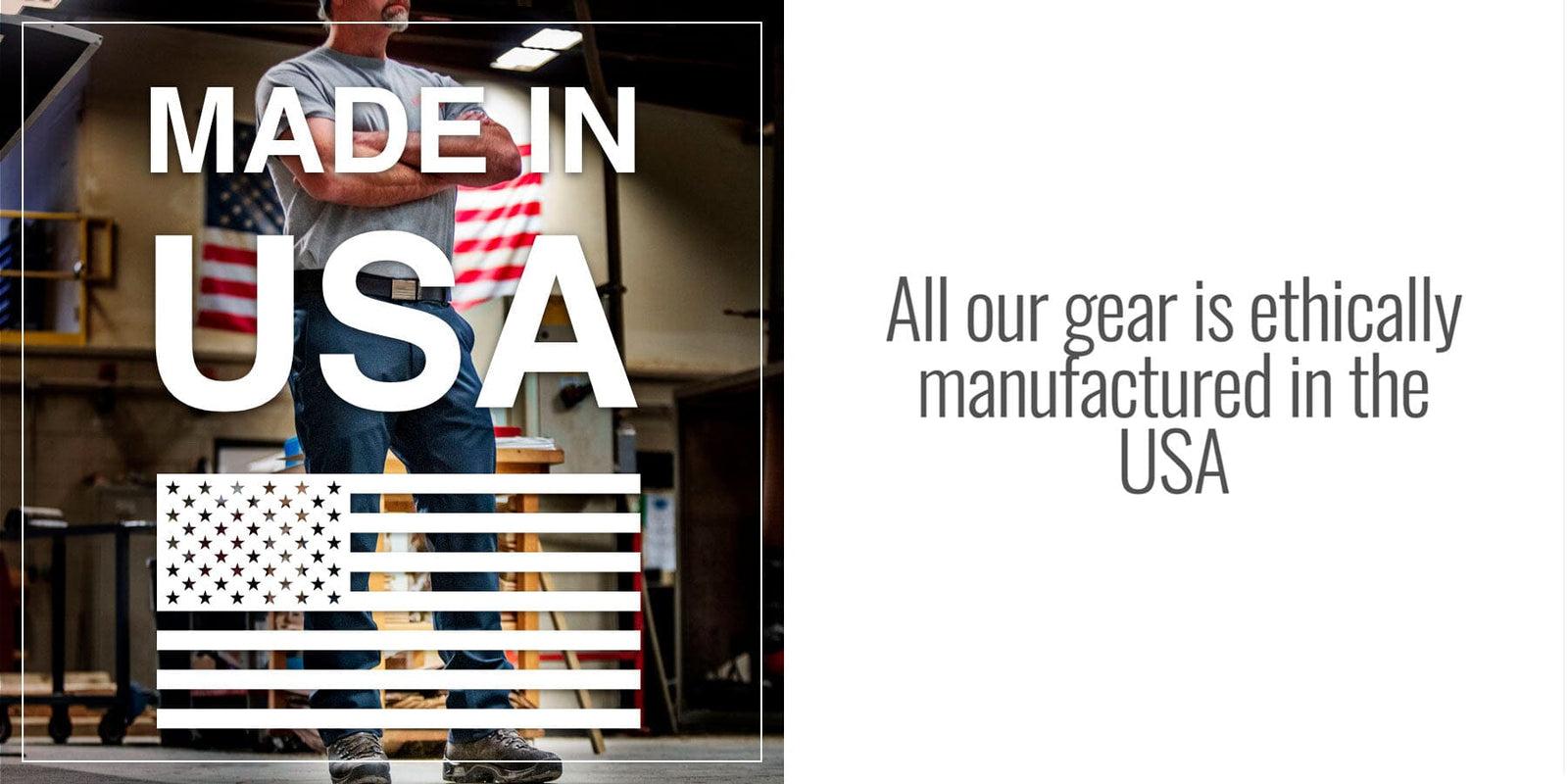

Under the FTC's standard, a product labeled "Made in USA" has to be "all or virtually all" made in the United States — materials and labor included. But a lot of workwear uses softer language — "assembled in USA," "designed in USA," or "USA-made with imported fabric" — that means something very different. Here's how to tell the real thing from the marketing.
"Made in USA" is regulated; "assembled in USA," "designed in USA," and "imported" are not the same claim. A fully domestic brand usually says so plainly, without hedging.
A garment can be sewn in the U.S. from fabric woven overseas. Genuinely domestic workwear sources or mills its fabric in the U.S. too — not just the final stitching.
Cut-and-sew is the labor-intensive step most often sent offshore. Brands that own or run a U.S. cut-and-sew operation will tell you exactly where it happens.
An American-flag graphic on a hangtag isn't proof of anything. A named facility, factory footage, or the actual people who make the gear are.
Makers who control their own quality tend to back it. A lifetime guarantee and in-house repairs are a signal of both confidence and real supply-chain control.
Domestic manufacturing usually means tighter quality control, transparent labor standards, a shorter supply chain, and gear built to be repaired rather than replaced. For workwear you rely on every day, that shows up as durability — not just a label.
1620 Workwear is cut and sewn in the USA — including at our East Boston factory — using fabric like our Stretch NYCO engineered with CORDURA® fiber technology. Every piece is backed by a lifetime guarantee and free repairs. Read our made-in-USA story, see our fabric technology, or shop USA-made work pants.
No. "Assembled in USA" generally means components (often imported) were put together here. "Made in USA" requires that all or virtually all of the product — materials and labor — is domestic.
Not automatically — but domestic makers who control their own cut-and-sew and fabric tend to hold tighter quality standards, and many back their gear with lifetime guarantees and repairs, which keeps it in service longer.
Check the exact label wording, ask where the fabric is milled and where the garment is cut and sewn, look for a named factory, and see whether they offer a real guarantee and repair program.

