


Your Cart is Empty
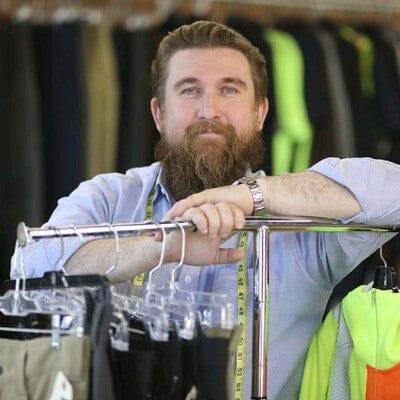

Everybody is selling a trades boom right now. I make the clothes people wear to do this work, which means I profit if you believe it. I don't.
A report released September 30, 2026, The State of America's Skilled Trades, found that for every 100 skilled trades workers the United States needs, training programs are producing only 55 people. The report comes from the Alliance for America's Skilled Trades, with research from Jobs for the Future and the Burning Glass Institute.
The report follows a rash of stories, from the New York Times to ABC News, running toward the trend of claiming the path for young people and those entering the workforce may be paved with plans for the trades.
I run a company that makes work pants. So in order to speak authoritatively on the topic of the trades, it feels right to start with what I stand to gain here. More people dedicating a career to work in the trades means more people being in the mix who need what we make. So, when I tell you the career boom in the trades everybody is predicting isn't going to show up the way it's being sold, understand that I'm arguing against my own book to a certain degree.
But I'm doing it anyway.
Since every few months another story runs about young people turning toward the trades, it's worth looking at them for a moment. In September 2026, Thumbtack's third annual Future of the Skilled Trades Report found that nearly half of Gen Z is learning or seriously considering a skilled trade. Fortune ran a story in July 2025, and again in June 2026, under the headline "Gen Z is ditching college for 'more secure' trade jobs—but boilermakers and welders actually rank among the worst entry-level jobs." In July 2026, the New York Times reported that Gen Z is increasingly turning to trade schools to future-proof their careers. In the end, college costs what it costs. The debt doesn't come off. There's work out here and not enough hands to do it. All of that is true, and I'm glad people are finally saying it out loud.
But too often, the conversation can veer into dicey assumptive territories. Skip school! Pick up a tool! Six figures by the age of twenty-five! All of which on the surface starts to seem less like a promise and more like a pitch, but then that pitch comes with questions. Who does that narrative actually serve? Because if it gets sold hard (and it does), and it gets sold mostly by people with something to gain from you believing it, then that should be cause for pause and reflection. You should notice that I'm one of the people that would ultimately benefit from this all being the case, and even still, I'm not so sold on how a wide, sweeping sea change away from all forms of higher collegiate education is the right move. It's too broad. And just like the trades, it's a decision that may not be for everyone.
Which is another core truth about the trades that these headlines gloss over, potentially at the peril of the generation (and their parents) grabbing on to the topic. Simply put, the trades are hard work. Really hard. A 2024 survey of 910 U.S. kids ages 12 to 15 by the platform Whop, reported by Fast Company, found nearly a third wanted to become YouTubers, while about one in five wanted to become TikTok creators. The jump from wanting to become a wealthy social media influencer to suddenly becoming a lifelong skilled tradesperson is not exactly a short one.
And the people I've watched do really well in the field of skilled trades work almost all had the same thing going in. Namely, they started young, and the work ethic was already built before they ever got on a site. That's like anything else. It's just not what a career-change pitch tells you.
I'm not telling anybody to stay out of the trades. That's not the end all, be all, and plenty of people build a good life doing this. But almost nobody selling the story is describing the job.
So here's the job as I'd break it down for someone considering the trades, and who wants to understand and appreciate what an apprenticeship or entrance into the different skilled workforce lanes could entail.
Carry a bale of shingles up a ladder. On a black roof. Now, do it again. Do it until the roof is done, and understand you're doing it in July, because July is when roofs get done, while everybody you went to school with has the summer off.
Thinking about welding? Weld as a boilermaker and you'll spend the day folded into a hole nobody designed for a person to fit into.
Generally the calendar doesn't work in your favor for having days bouncing through fields in temperate times, especially in multi-season regions. There, everyone else's good weather is your hard season. The heat seems to always show up exactly when the work does. And work it is.
I'm not saying any of this to scare anyone off. I'm saying it because "there are a lot of jobs in the trades" and "you can do this work" are two different sentences, and the people selling you the first one keep letting you assume the second. I want a skilled workforce going in not for a job, but for a career, and with their eyes open about what that really means.
If you grew up playing video games by yourself behind a computer, start adjusting now. There are very few jobs out in the trades and traditional blue collar work where you get to go off in your own direction and stay there permanently. What you do tends to land on somebody else. What somebody else does lands on you as well. The mistake of a framer becomes the electrician's problem becomes the drywaller's whole afternoon. This extends to various other corners of skilled work, but you get the idea.
Bottom line is you get measured on whether the crew can count on you, not on how good you are by yourself.
Nobody warns you about this one. If you're young and jumping into the game of the skilled trades, expect to spend more energy managing personalities than managing material. It's just the reality of the social construct that comes with working around people who've been doing a job for thirty years, and very often, have little to no patience for a new kid. There are foremen who communicate by yelling, and that's when they are in a good mood. There are days when the job goes fine but the crew is less than sunny.
In other words, you need thick skin. A lot of it.
A shortcut to thinking about the trades is it's where you land if school wasn't for you. Whoever's telling you that has never done the work, and worse yet, is polluting the narrative with false pretense. The trades occupy all manner of your brainpower, emotional intelligence, and ability to demonstrate critical thinking if you're going to make a career of it. It's why the trades is a career of pride for those that go the distance.
You'll need math. You'll need to make decisions standing up, fast, with a truck waiting on you. Most of these jobs punish you immediately for not thinking. Ask an electrician what happens when he stops paying attention. He burns somebody's house down. Or he hurts himself. There's no version of this where you clock in and switch your head off.
This is the part where I'm supposed to sell you something. Instead, I'll just give you the mechanics.
Lighter pants mean less weight to carry up and down a ladder all day, which means you've got something left in the tank at four o'clock, be it for socializing, connecting with your family, working on a hobby, or just not being the kind of crank nobody wants to be around after you plied your trade and made a living all day. So gear that uses fabric that repels water in the elements (or just a blue collar cocktail of energy drinks and electrolytes spilled in a raucous company truck ride) means you're not hauling a wet shirt or soggy pants around through the afternoon. You tend to drink more water when you're not already soaked in it, which keeps your body working better and makes you less prone to fatigue. The fit of those fabrics and workwear matters too. Of course, boots matter because you're standing in them for ten hours, and your back finds out before you do. None of that is a preference. It's the same stone fact as the cost of goods and labor on a jobsite.
Here's what new people get backwards. They buy cheap gear because they're new, and see a less expensive buy as a shortcut to an endgame instead of looking at investing in gear that will last longer and keep you in better form on the job. When you're new you're slower at the job anyway, you're likely to be more tired even with fresher legs than the 30-year foreman or business owner, which means you've got the least margin for a bad day. You need to show up and show everyone this is a career, not an escape hatch. And that's just when having the right gear is doing the most work for you.
One more thing.
Many reading this may not even have any plans to go into the trades. You make what the people in the trades wear, or you distribute it, or you write the contract that puts it on their backs. So here's why the labor story matters past the headline.
If the influx of new people entering the trades doesn't arrive the way it's being sold, and I don't think it will (at least not in the numbers people are throwing around), then your customer over the next ten years isn't a wave of new bodies in new sizes. It's the same crews, a little older, a little shorter-handed, working more hours with fewer people on them. That's a different set of demands on a garment. It gets worn longer. It gets washed more. It has to hold up on a body that's been doing this for twenty-five years.
I could be wrong about the numbers or the twisting of the narrative around the rash of headlines and datapoints coming out. But I'd rather plan around a crew that's actually out there than the one in the press release, because in the trades, authenticity and experience is everything.
The world needs skilled trade workers. It needs ditch diggers for that matter, be it by hand or by machine. It always has and it always will. But being out in the field digging the ditch for a project is hard either way you cut it, and for some people it may actually be easier to go to college and pay the debt off. That's not the end all, be all either — it depends entirely on the person.
What I'm asking is that we, as anyone who works within or has a business touching the trades, describe the work and life in the field honestly. The people already doing it have earned that much. And anybody thinking about joining them ought to walk onto the site with their eyes open instead of with a pitch or few data points promising future riches without the blood, sweat and tears that invariably go with it leading the decision in their head.
Ted DeInnocentis is CEO and co-founder of 1620 Workwear, which is based in Amesbury, Massachusetts, and owns its cut-and-sew factory in East Boston. This column also appears in the NAUMD (Network Association of Uniform Manufacturers & Distributors) newsletter.

